News & Market Updates
Market updates, deal news, and recognition from Jason Bitton RE/MAX Commercial. Covering Lake County and Chicago's north and northwest suburbs.
Lake County & North Suburbs CRE Update

The Fed announces its next rate decision tomorrow, and the 10-year Treasury slipped to about 5% last week. This issue: a downtown Libertyville mixed-use building trades with a bank loan behind it, Grayslake’s data center developer puts big numbers on the table, Northbrook resets its downtown TIF, and the suburbs’ emptiest office buildings keep getting cheaper.
Lake County spotlight
Downtown Libertyville mixed-use just traded. Eleven5 Lake Apartments at 115 Lake St., at Milwaukee Avenue a block from the Metra, sold for $22 million, financed with a $16.5 million Associated Bank loan arranged by JLL. That is about 75% of the price. The building has 34 apartments, 97% occupied, over roughly 25,147 square feet of ground-floor commercial space leased 100% to five tenants, four of them restaurants. Banks are still lending on stabilized, walkable mixed-use in our towns.
Grayslake’s data center developer released its numbers. A T5-funded study by Greener Impacts projects nearly $10 billion in economic output across Illinois from 2024 to 2031, including $7.27 billion in Lake County, and 940 operating jobs a year in the county starting in 2027. The mayor says the first property taxes likely arrive in 2028. Opponents want the study’s methods released, and their lawsuit is still pending. Keep in mind who paid for the study.
Abbott is splitting in two. The North Chicago-based company plans to spin off its nutrition business, with $8.5 billion in annual sales, 16,000 employees and 14 plants, by the end of 2027. Abbott says the new company’s headquarters will stay in the Chicago area but has not named a town. With Abbott’s headquarters here in Lake County, that is a real estate question worth watching.
Mundelein townhouses wait a few more days. Deerfield’s Huron Group has a 68-unit Midlothian Crossing plan on nearly 8 acres at Midlothian and Courtland, and it was due for a second village board vote Monday after a 2-2 tie last month. That meeting was canceled and moved to Thursday.
Northern Cook County
Northbrook reset its downtown TIF. On October 13 the board repealed Ordinance 2026-51, which had postponed consideration of the proposed Downtown TIF District, and the village says it will set new dates for the Joint Review Board and public hearing later. The board also gave a non-binding preliminary review to a single-story retail and restaurant building at 755 Skokie Boulevard. No formal application has been filed.
Therapy users keep filling suburban office. Chicago Speech Therapy leased 7,941 square feet at the two-building campus at 3436 N. Kennicott Ave. in Arlington Heights, which still has 2,367 to 12,074 contiguous square feet open. NAI Hiffman counted 164,989 square feet of positive Class B office absorption in the northwest suburbs in the second quarter.
Buffalo Grove is weighing 189 new homes. The planning commission voted 5-2 to recommend M/I Homes’ Kenley plan, 37 single-family homes and 152 townhouses on 36.8 acres along Aptakisic Road, with 26 conditions. No village board date is set. New rooftops are what neighborhood retail landlords want to see.
Around the region
Rates eased a little before the Fed. The 10-year Treasury ran between 4.96% and 5.15% from October 19 to 23, with the effective fed funds rate at 3.88%. The Fed wraps its meeting October 28; I will report the outcome next issue.
Older office in the suburbs is selling cheap. Cushman & Wakefield put second-quarter vacancy in its northwest suburban submarkets at 29.8%, against 24.2% for the suburbs overall, REjournals reports. Office buildings in Naperville and Oak Brook sold for $36 and $34 a square foot, and Rolling Meadows office has lost about 25% of its assessed value since before the pandemic. Downtown, the 2.1-million-square-foot Illinois Center heads to a November 12 sheriff’s sale with a $66 million appraisal, against a $390 million valuation in 2015.
Industrial tenants are buying their buildings. Michelin paid $151 million for the roughly 2-million-square-foot Wilmington distribution center it has occupied since 2015, about $75 a square foot by my math. Chicago-area industrial sales reached 48.7 million square feet in the first three quarters, up 72%, per Cushman & Wakefield.
Data centers are on ballots, but not ours. Joliet, Bloomington and towns in Madison and Morgan counties vote on data center questions November 3; most are advisory. Open threads: I still have no reported result on Deerfield’s Corporate 500 bids or the forest preserve’s Antioch land vote.
What this means for you
Sellers: Well-leased, walkable mixed-use can still get bank financing, as Libertyville showed, so clean rent rolls and estoppels sell. If you own Class B office, therapy and medical users are your most active tenants and buyers. Know what their build-outs cost before you set a price.
Buyers: Cheap office is not automatically a bargain once taxes, vacancy and conversion costs are counted. Underwrite at a 5% Treasury whatever the Fed does tomorrow, and track the new homes in Buffalo Grove and Mundelein if you are shopping neighborhood retail.
Investors: Users buying their own buildings, like Michelin, tell you where long-term demand is. Treat developer-funded projections, including Grayslake’s, as a starting point, and do not count on Northbrook TIF money until a hearing date is set.
Thinking about your next move? Get a read on your property's value with the free Property Value Estimator, or get started with a no-obligation market consultation — Jason Bitton, RE/MAX Commercial, Libertyville.
Earlier updates
Oct 13, 2026Lake County & North Suburbs CRE Update — Grayslake pours foundations while its lawsuit waits, a countywide sales tax heads to the November 3 ballot, S&C Electric leases 295,000 square feet in Glenview, and Evanston apartments trade near $465,000 a unitRead ›Close ×
Four weeks after the Fed’s first hike in more than three years, the 10-year Treasury is still above 5%, and the deals getting done in our market are the ones with durable income behind them. This issue: Grayslake pours foundations while its lawsuit waits, Lake County voters get a sales tax question every retail landlord should watch, Glenview lands a 295,000-square-foot manufacturer, and Evanston apartments trade at institutional prices.
Lake County spotlight
Grayslake is building while the court case waits. Foundation work is underway on the first 800,000-square-foot building at T5’s Cornerstone campus, and the village has filed a motion to dismiss the residents’ lawsuit, which still has its October 30 status hearing. Grayslake projects $1.4 billion for local taxing bodies over 20 years, and about $100 million a year at full build-out of up to 18 buildings on 472 acres. The county’s moratorium on unincorporated land is unchanged.
A countywide sales tax is on the November 3 ballot. Voters will decide on a sales tax of up to 1% for school facilities, resource officers and mental health staff. Groceries, vehicles, services and medications are exempt, and an estimated 53% of purchases are made by nonresidents. Supporters pitch it as an alternative to property taxes for school buildings; the county Republican committee opposes it. Whether it actually eases levies is a claim the article does not verify.
Another retail box goes to recreation. A fencing academy is moving from Lake Forest into 900 S. Milwaukee Ave. in Vernon Hills, the former By the Yard furniture store, pending a special-use permit for a specialty school. Training and fitness users keep backfilling single-tenant retail along our corridors.
A land comp out west. The forest preserve district’s planning committee recommended buying 37 acres on Deep Lake Road in Antioch Township for $1.52 million, roughly $41,000 an acre including a home and outbuildings. The full board still has to vote.
Northern Cook County
Glenview landed a 295,000-square-foot manufacturer. Chicago power-equipment maker S&C Electric agreed to lease 2601 Protection Parkway from Dermody Properties at the Logistics Campus, a 3.2-million-square-foot development. Big new-construction boxes in the north suburbs are still finding users.
Evanston apartments are trading near $465,000 a unit. Draper and Kramer bought the 268-unit Albion Evanston for about $126 million, 98.5% leased, and Arnel paid $31.5 million for 68 units at 1555 Ridge Ave. That is roughly $470,000 and $463,000 per unit. The same report counts $726.7 million of Chicago-area multifamily sales across 77 deals in September, per CoStar.
Arlington Heights is back in the stadium conversation. State lawmakers are weighing a bill that would let towns create stadium authorities, so the Bears could privately fund a publicly owned stadium that pays no property tax, FOX 32 reports. Supporters hope for action in the fall veto session; the Bears still say their focus is Hammond, Indiana. Nothing is decided. Open thread: I still have not found a reported result from the Corporate 500 leasehold bids in Deerfield.
Around the region
Rates are holding at the high end. The 10-year Treasury ran between 5.22% and 5.31% from October 2 to 8, with the effective fed funds rate at 3.88%. The Fed meets next October 27–28.
Lenders are lending. About $34 billion of private-label CMBS priced in the third quarter, the busiest third quarter since before the financial crisis. Debt is expensive, not absent.
Industrial is steady, with more supply coming. Cushman & Wakefield’s third-quarter report puts Chicago-area vacancy at 4.7%, with average asking net rent of $7.53 per square foot, up 3.9% from a year ago. Construction is up 63.8% to 14.8 million square feet, 43% of it speculative.
Office is splitting in two. Downtown trophy vacancy is down 420 basis points from a year ago, per Cushman & Wakefield data cited by Bisnow, while brokers there say refinancing remains hard to access.
What this means for you
Sellers: If you own leased industrial or stabilized apartments, buyers and lenders are still showing up at strong numbers. If you own an empty retail box, recreation and training users are a real buyer and tenant pool, so get zoning answers before you list.
Buyers: Underwrite at today’s 5%-plus Treasury, not the rate you hope for after October 28. More speculative industrial construction means more choice next year, and land comps like Antioch help you test what raw ground is worth.
Investors: Watch November 3. A countywide sales tax affects retail tenants’ sales, and its effect on property tax bills is still unproven. Near Grayslake, a pending lawsuit is still a risk your lender will price.
Thinking about your next move? Get a read on your property's value with the free Property Value Estimator, or get started with a no-obligation market consultation — Jason Bitton, RE/MAX Commercial, Libertyville.
Oct 22, 2026Jason Bitton of RE/MAX Commercial Brokers $4.5 Million Sale of a 41,000-Square-Foot Mixed-Use Block in NorridgeRead ›Close ×
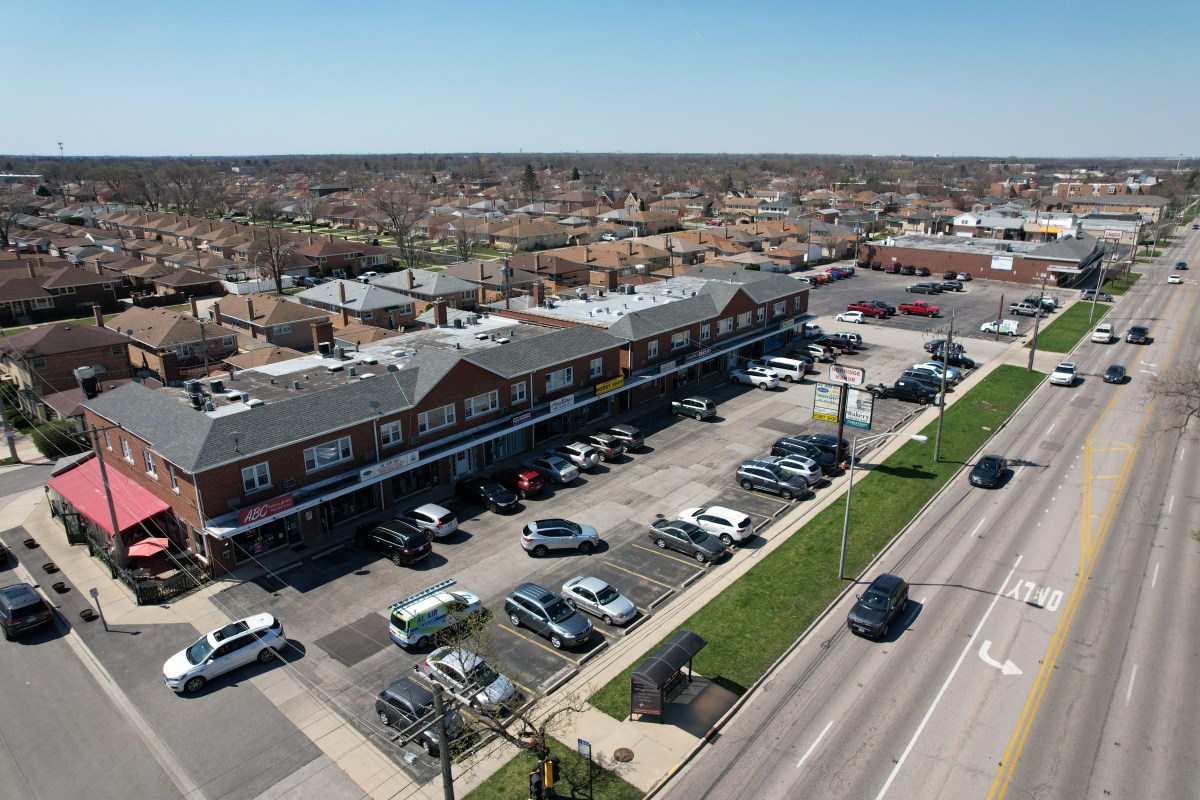
Eight storefronts, 16 apartments and a one-story store building on W. Lawrence Avenue sold for $4.5 million, closing on October 21, 2026.
For Immediate Release
NORRIDGE, Ill. — October 22, 2026 — Jason Bitton of RE/MAX Commercial in Libertyville represented the seller in the $4.5 million sale of 7701–7757 W. Lawrence Ave. in Norridge, a mixed-use block of about 41,000 square feet on 1.94 acres. The sale closed on October 21, 2026.
1st Liberty Management, Inc. of Prospect Heights bought the property from a private owner.
The property includes two two-story buildings with eight ground-floor storefronts and 16 apartments above them, plus a one-story, roughly 15,000-square-foot store building at 7757 W. Lawrence.
Bitton took on the listing after an earlier marketing effort. He rebuilt the rent roll lease by lease and underwrote the block as a value-add investment, a stabilized hold and a redevelopment site. The owners’ business occupied the store building and was being sold at the same time. As that negotiation changed, the buyers in play shifted between investors and owner-occupants.
This was a complicated deal with 16 apartments, eight storefronts and a department store. The owners’ business was selling at the same time after years of attorney review. We itemized every lease and worked with investors and owner-occupants as the terms changed. We kept at it until it closed.
— Jason Bitton, RE/MAX Commercial, Libertyville
About Jason Bitton RE/MAX Commercial
Jason Bitton is a commercial real estate broker based in Libertyville, Illinois, working exclusively in commercial real estate across Lake County and the northern Chicago suburbs. He was the #1 RE/MAX Commercial broker in Illinois in 2022, 2024 and 2025 and is a member of the RE/MAX Hall of Fame. jasoncre.com
Media contact: Jason Bitton, (847) 858-2909, jason@jasoncre.com
###
Oct 2, 2026Jason Bitton of RE/MAX Commercial Brokers $270,000 Sale of an Office Condominium in LibertyvilleRead ›Close ×
A 1,954 sq. ft. office condo on W. Winchester Road sold for $270,000 about seven weeks after it was relisted, with two buyers competing for it.
For Immediate Release
LIBERTYVILLE, Ill. — October 2, 2026 — Jason Bitton of RE/MAX Commercial in Libertyville represented the seller in the $270,000 sale of 1880 W. Winchester Road, Suite 204, a 1,954-square-foot office condominium in Libertyville. The sale closed on October 2, 2026.
Bitton relisted the suite on August 12 after an earlier contract fell through. It drew two competing offers within two weeks and went under contract on September 2. The sellers chose between the two buyers based on which offer was most certain to close. The sale closed 30 days later.
The buyer, a psychiatry practice that treats depression with transcranial magnetic stimulation (TMS), purchased the second-floor suite from its private owners. The suite has four private offices, a conference room, a reception and waiting area, a kitchen and two private restrooms. It is in a two-story elevator building with on-site parking.
The sellers wanted a straightforward cash sale with no surprises, and that is how it closed.
— Jason Bitton, RE/MAX Commercial, Libertyville
About Jason Bitton RE/MAX Commercial
Jason Bitton is the #1 RE/MAX Commercial broker in Illinois (2022, 2024, 2025) and a RE/MAX Hall of Fame member, based in Libertyville and working exclusively in commercial real estate across Lake County and the northern Chicago suburbs. jasoncre.com
Media contact: Jason Bitton, (847) 858-2909, jason@jasoncre.com
###
Sep 29, 2026Lake County & North Suburbs CRE Update — the Fed hikes for the first time since 2023, Lake County pauses data centers for eight months, Mesirow buys Amgen’s Deerfield campus for $151M, and Deer Park Town Center trades for $125MRead ›Close ×
The Federal Reserve raised rates on September 16 for the first time in more than three years, Lake County settled its data center question for the next eight months, and two large north-suburban trades printed fresh pricing in the same fortnight. Here is what resolved from our last issue, what is new, and what it means for your building.
Lake County spotlight
The county hit pause on data centers — unanimously. The Lake County Board approved an eight-month moratorium on data center applications in unincorporated areas, running to May 11, 2027 or until rules are adopted, with a possible four-month extension. The county has received no applications; the pause gives planners time to draft guidelines after more than 1,300 public comments. It does not reach incorporated towns such as Grayslake, where T5's campus is already permitted. The residents' lawsuit there has a status hearing October 30.
Vernon Hills just kept a 288-job employer. Educational products company hand2mind is consolidating four locations into a 698,360-square-foot distribution center at 100 S. Milwaukee Ave., creating 37 jobs and retaining 288, backed by roughly $4.2 million in state EDGE tax credits. Big-box industrial in Lake County remains a retention play for companies that already call it home.
Lincolnshire is about to have an office question. Essendant is closing its headquarters at 200 Tri-State Drive, affecting 510 employees (200 on site, 310 remote), with terminations scheduled from October 3. The article gives no square footage or lease terms, so treat any resulting space as unconfirmed until it lists.
Antioch is weighing a TIF. The village is considering a tax increment district across about 108 acres and 203 parcels downtown, with a public hearing November 12. Current assessed value is $15.4 million, and values would be frozen for up to 23 years for other taxing bodies.
Northern Cook County
Deerfield office just traded on a sale-leaseback. Mesirow paid $151 million, or $228.79 per square foot, for the 660,000-square-foot campus at 1 Horizon Way, buying from Amgen, which stays in one of the three buildings. Separately, bids on the four-building, 696,770-square-foot Corporate 500 leasehold were due September 24; I have not found a reported result, so I will update you when one is public.
Deer Park Town Center changed hands at $125 million. A venture of AEW Capital Management and Brand Street Properties bought the 410,000-square-foot center from a PGIM Real Estate affiliate, or $304.88 per square foot. Last issue's Skokie trade cleared at $174.29, so quality and location are separating pricing sharply.
Around the region
The rate hike happened. The Fed unanimously raised rates a quarter point to 3.75%–4%, the first increase since July 2023, and its projections show 16 of 18 members backing another before year-end. The 10-year Treasury crossed 5% ahead of the meeting, its highest since 2007. Lenders quoted in that report expect more cash-in refinances and recapitalizations, and a wider gap between well-capitalized owners and overleveraged ones facing maturities.
Industrial is still the tightest product. Chicago-area industrial vacancy fell to 4.5% in the second quarter, JLL reports, on 5.8 million square feet of net absorption, with average asking rent up to $8.12 per square foot. Leasing topped 10 million square feet for a fourth straight quarter.
Office sublease space is shrinking, but not necessarily leasing up. Transwestern counts 4.27 million square feet of sublease availability, down from 4.51 million.
What this means for you
Sellers: Higher rates cut what leveraged buyers can pay, but quality still commands a premium, as Deer Park showed. Price to the debt market as it is today, and have leases, CAM reconciliations and building-systems history ready before you list.
Buyers: Underwrite another rate increase and expect lenders to want more equity. Sale-leasebacks like Deerfield can be a way to buy real estate with a credit tenant already in place, and industrial buyers should expect competition for well-located space.
Investors: Tight industrial and well-leased retail are where institutions are still writing checks. Office and any land priced off data center speculation deserve extra caution until the county drafts its rules and the Grayslake case moves.
Thinking about your next move? Get a read on your property's value with the free Property Value Estimator, or get started with a no-obligation market consultation — Jason Bitton, RE/MAX Commercial, Libertyville.
Sep 8, 2026The Search Is On: 9,000 Children and Seniors Need a Lake County Christmas Warehouse by November 15Read ›Close ×
Catholic Charities and a Libertyville commercial broker are combing Lake County for a 65,000–80,000 sq. ft. warehouse a building owner will lend for five weeks — so every gift donated this Christmas has somewhere to land.
For Immediate Release
WAUKEGAN, Ill. — September 8, 2026 — Catholic Charities' Celebration of Giving provides Christmas gifts to more than 9,000 children and families throughout Cook and Lake counties each year. Catholic Charities seeks a warehouse space in Lake County to hold the tremendous outpouring of donated toys, housewares, and clothing for gifting to families throughout our region.
The need
“Each year we find ourselves in the unenviable position of heading into the Christmas season without a warehouse or other facility from which to collect and distribute the gifts donated to our clients,” the program's organizers wrote in this year's appeal to building owners. “It might seem like Christmas is too far away to consider this matter urgent — please think again.”
Commercial real estate broker Jason Bitton of RE/MAX Commercial in Libertyville is assisting in the search across the county's industrial corridors.
There are empty warehouses sitting dark all over Lake County right now, and one of them can be the reason 9,000 kids and seniors get a Christmas. Five weeks, zero cost to the owner beyond an open door — I've never marketed a vacancy with a better return.
— Jason Bitton, RE/MAX Commercial, Libertyville
The facts
WHO — Catholic Charities of the Archdiocese of Chicago's Celebration of Giving Program, which serves more than 9,000 children, seniors, and families across Cook and Lake counties; assisted in the search by Jason Bitton, RE/MAX Commercial, Libertyville.
WHAT — A borrowed (donated-use) empty warehouse of 65,000–80,000 square feet, used as the central site to collect, sort, and distribute donated Christmas gifts. Catholic Charities assumes all liability and pays all utility costs for the occupancy period.
WHY — Without a committed site, there is nowhere to receive and distribute the gifts. The program has no permanent facility and relies each year on a building owner's generosity.
WHERE — Within roughly 30 minutes of Waukegan or the surrounding Lake County towns.
WHEN — Occupancy November 15 through December 20 (five weeks). A commitment is needed now: the organizing window closes months before the trucks arrive.
HOW — Building owners, managers, or anyone who knows of qualifying vacant space should contact Catholic Charities: (847) 782-4210, 671 S. Lewis Ave., Waukegan — or Jason Bitton, RE/MAX Commercial, (847) 858-2909, jason@jasoncre.com.
If you own or manage space
You do not need to have a listing, a broker, or a plan. If you have a building between 65,000 and 80,000 square feet that will be dark this November and December — or you know someone who does — a phone call is enough to start. The building comes back to you on December 20. Catholic Charities carries the liability and pays the utilities in between.
About Catholic Charities and the Celebration of Giving Program
The Celebration of Giving Christmas Gift program is operated by Catholic Charities of the Archdiocese of Chicago in Cook and Lake Counties, providing Christmas gifts to more than 9,000 children, families, and fixed-income seniors. Catholic Charities of the Archdiocese of Chicago partners with mission-driven people and organizations across Cook and Lake counties to witness a message of mercy and hope to a world in need. We are called to accompany anyone in need, regardless of faith, gender, race, or ethnicity. Visit catholiccharities.net for more information.
About Jason Bitton RE/MAX Commercial
Jason Bitton is the #1 RE/MAX Commercial broker in Illinois (2022, 2024, 2025) and a RE/MAX Hall of Fame member, based in Libertyville and working exclusively in commercial real estate across Lake County and the northern Chicago suburbs. jasoncre.com
Media contact: Jason Bitton, (847) 858-2909, jason@jasoncre.com
###
Sep 8, 2026Lake County & North Suburbs CRE Update — Grayslake issues the first data center permit as the county votes on a moratorium, a $122M Skokie retail trade, and a 256-unit Chase Plaza planRead ›Close ×
In the same week, Grayslake handed T5 Data Centers its first building permit and a Lake County board committee voted to freeze data centers everywhere the county controls. That contradiction is the story of this fall. Add a $122 million retail trade one county south, a 256-unit rewrite of a tired Lake-Cook strip center, and a Fed meeting next week that futures markets think ends in a hike.
Lake County spotlight
Grayslake issued the first permit — shovels are moving. The village granted the initial building permit September 1 for the first facility at the T5 @ Chicago IV campus in Cornerstone, an 800,000-square-foot building where site work begins immediately. Village officials call it the operational start of an expected $18 billion private investment and project $1.4 billion in property tax and permit fee revenue over 20 years across local taxing bodies — secured, they say, with no local incentives, exemptions or TIF. The residents' lawsuit challenging the approvals is still live, with a status hearing October 30. For owners: construction traffic, labor demand and land inquiries along Peterson and Alleghany are about to get real — and a permit issued under a contested approval is a risk a lender will price.
The county is about to hit pause everywhere else. The Lake County Board votes on an eight-month moratorium on data centers in unincorporated areas at 9 a.m. today in Waukegan, after the zoning board and a county board committee both recommended it unanimously. If enacted, it holds any data center application in unincorporated Lake County until May 2027. The county notes that data centers are not currently defined or regulated anywhere in the Lake County Code — the pause is to write the rules before a proposal arrives. Staff will draft definitions, zoning classifications and performance standards; more than 1,300 public comments are already in the record. Municipalities are expected to borrow the county's rulebook, so this quietly sets the standard your village will apply.
A reminder that approvals aren't closings. The Waterfront Lake Zurich proposal for the Block A site ended when the sale was terminated in August, sending a prime downtown parcel back to square one, while a 24-unit workforce housing building nearby advanced to a final county vote. Entitlement and financing have to close together.
Northern Cook County
A $122 million retail comp just printed in Skokie. An affiliate of Fairbourne Properties paid $122 million, or $174.29 per square foot, for Village Crossing, the 700,000-square-foot center at 5507 W. Touhy Ave., buying from Nuveen in a CBRE-brokered deal. The property is 95% leased. Grocery- and value-anchored centers with real occupancy are trading again, and at prices institutions are willing to exit at. If you own a well-leased center in Gurnee, Vernon Hills or Mundelein, this is the comp your appraiser will reach for.
Another aging Lake-Cook strip center is being reimagined as housing. Shorewood Development Group and Urban Street have proposed converting Buffalo Grove's Chase Plaza, at Lake Cook and Arlington Heights roads, into a mixed-use neighborhood anchored by a 256-unit apartment building, with modernized storefronts and a new corner building. The village board referred the plan to its planning and zoning commission on August 17. Same developer, same thesis as the Deerfield Walgreens campus: tired commercial real estate along Lake-Cook is worth more as land with rooftops on it.
Around the region
The Fed meets next week and the market says up. As of August 31, the CME FedWatch tool put roughly 66% odds on a quarter-point increase at the September 15–16 meeting, up from about 40% a week earlier. Those odds have swung hard on every jobs print this summer, so treat the number as a range, not a forecast — but underwrite the hike, not the cut.
Capital is still moving despite the rate noise. U.S. commercial real estate transaction volume reached $233.6 billion in the first half, up 14.7% year over year, according to Avison Young. Buyers are not sitting out. They are simply paying for durable income rather than for cap rate compression.
What this means for you
Sellers: Volume is up and well-leased retail just traded at a real number — that is your window. A September hike trims what a leveraged buyer can borrow against your building, so waiting costs you proceeds, not just time. Go now with leases, CAM reconciliations and roof and HVAC history assembled.
Buyers: Rate-lock or hedge before the September 16 decision and stress-test a quarter point higher than today. Near any unincorporated parcel, read the county's moratorium language before you sign — the definitions written over the next eight months will decide what your village lets you build. On contested sites, ask your lender how a pending lawsuit affects your loan, not just your title policy.
Investors: Two live trades, both with fresh evidence this issue. Buying obsolete commercial along Lake-Cook as land and adding density — Chase Plaza is the template. And well-occupied multi-tenant retail and industrial, where income is durable enough that institutions will underwrite it. What I would still avoid is raw ground priced off data center speculation until the county finishes its rulebook and Grayslake gets past October 30.
Thinking about your next move? Get a read on your property's value with the free Property Value Estimator, or get started with a no-obligation market consultation — Jason Bitton, RE/MAX Commercial, Libertyville.
Sep 1, 2026Lake County & North Suburbs CRE Update — a lawmaker questions the Grayslake data center, a 697,000-square-foot Deerfield office campus hits the market, and futures flip to a September rate hikeRead ›Close ×
Two weeks ago the debate was whether the Federal Reserve would cut again this year. This week the futures market says the next move is up. Add a state lawmaker publicly questioning Lake County's largest development, a 697,000-square-foot Deerfield office campus hitting the market, and federal disaster loans opening to businesses damaged by the July 27 storms, and there is real work to do before year-end.
Lake County spotlight
The Grayslake data center fight escalated — and now has a court date. State Rep. Daniel Didech (D-Buffalo Grove) said August 30 that the T5 @ Chicago IV campus “should not proceed” unless the village and T5 can show it won't raise energy costs or harm water quality, noise levels and the surrounding ecology. Grayslake postponed its August 20 public comment session over safety concerns after threatening social media posts. The residents' lawsuit naming the village, T5 and Alter Asset Management has an initial status hearing October 30. As approved, the campus runs up to 472 acres and more than 10 million square feet drawing roughly 1.55 gigawatts from ComEd. If you own land in a corridor being pitched for data centers, watch this docket: an approval on the books is not the same as an approval that holds.
Federal disaster loans are open to storm-damaged businesses here. The SBA's disaster declaration for the July 27 storms and tornadoes covers Lake and Cook counties, opening low-interest physical damage and economic injury loans for losses insurance didn't fully cover. Physical damage applications are due October 19; economic injury runs through May 18, 2027. If you deferred a roof or rooftop-unit repair after July 27, this is cheaper capital than your line of credit — and a documented repair is worth real money at renewal.
Northern Cook County
A 697,000-square-foot Deerfield office campus is on the block. Hilco Real Estate and First Financial Network are seeking bids on the leasehold interest in Corporate 500 at 500–540 Lake Cook Road, with a September 24 deadline. The four-building campus is 72% leased to more than 37 tenants, with about 200,000 square feet available and a 5.9-year weighted average lease term. Opal Holdings paid $178.2 million in 2021 and lost the leasehold at a sheriff's sale last November. Colliers counts only two Chicago-area office properties over 250,000 square feet trading in the past three quarters — so whatever this campus clears at becomes the reference point for large office pricing along Lake-Cook.
South Barrington's first TIF district moved a step closer. A joint review board backed tax increment financing for the cleared former Allstate headquarters site near Higgins and Bartlett roads, where Opus intends to buy the land and build three light-industrial buildings. A public hearing is set for 7 p.m. September 17, with a board vote expected by early 2027. Pair that with the Shorewood purchase in Deerfield from our last issue: obsolete office campuses here are being bought as land, and highest-and-best-use keeps coming back industrial.
Around the region
A rate hike is now the base case. At Jackson Hole, Fed Chair Kevin Warsh said inflation has not “meaningfully improved” and the Fed has “work to do.” CME FedWatch now puts roughly 66% odds on a quarter-point increase at the September 15–16 meeting and about 50% on another in December, with mortgage rates approaching 7%. Every quarter-point costs a leveraged buyer proceeds — and proceeds are what set your price.
Industrial is still carrying the region. Chicago-area net absorption hit 6.1 million square feet in the second quarter, more than five times the first, and the market ranked third nationally with 9.4 million square feet among the 100 largest first-half leases, per CBRE. Asking rents reached $9.33 per square foot, up 7.4% year over year against 2.1% nationally. CBRE's David Prell on supply: if you need more than 850,000 square feet here, “there really is nowhere to go.”
Springfield isn't finished with data centers. Gov. Pritzker paused applications to the state's 2019 data center tax incentive program this summer, the POWER Act stalled in spring, and Didech says he'll push it again in the fall veto session — while a spring poll found 68% of likely voters support regulating the sector, according to Bisnow.
What this means for you
Sellers: If you've been waiting on cheaper debt to lift your price, the market just moved against you. A September hike shrinks what a leveraged buyer can borrow against your building, and December may do it again. And if you took July 27 storm damage, repair and document it before you go to market.
Buyers: Lock rate protection now and stress-test a quarter to a half point above today. Give entitlement diligence the same weight you give environmental — Grayslake shows a village approval can be sued, and Springfield can change the rules mid-project. On any storm-damaged building, check SBA eligibility before closing; October 19 is the deadline.
Investors: Two spreads are open here. Obsolete office bought as land and redeveloped light-industrial — what Opus is underwriting in South Barrington. And well-located multi-tenant industrial, where rents are up 7.4% and nothing is available at scale. What I'd avoid is raw land priced off data center comps until the courts and the legislature settle what's actually buildable.
Thinking about your next move? Get a read on your property's value with the free Property Value Estimator, or get started with a no-obligation market consultation — Jason Bitton, RE/MAX Commercial, Libertyville.
Aug 18, 2026Lake County & North Suburbs CRE Update — a lawsuit lands on the Grayslake data center, Illinois breaks its tornado record, and a split Fed holds with three dissents toward a hikeRead ›Close ×
A lawsuit landed on the largest development Lake County has seen in a generation, Illinois broke its all-time tornado record and insurers are already repricing risk, and the Federal Reserve held rates steady while three of its members argued for a hike. Here's what the period meant for property owners, buyers, and investors in our market.
Lake County spotlight
The Grayslake data center is now in court. Opponents of T5 Data Centers' planned campus in Grayslake's Cornerstone business park filed suit July 31 in Lake County circuit court, naming the village, T5 and Alter Asset Management. The plaintiffs argue data centers aren't expressly permitted under Grayslake's zoning code and that officials violated the Illinois Open Meetings Act while negotiating the deal. The village has approved a campus of up to 472 acres and 18 buildings, an investment officials have estimated at as much as $18 billion. T5 suspended its wetland remediation permit application in late July, and the county has separately been pursuing a data center moratorium. If you own land anywhere near a corridor being pitched for data centers, this is the entitlement-risk case to watch — approvals on the books are not the same as approvals that hold.
Two infrastructure moves worth noting. Lake County approved the application for a waste transfer station to replace the Countryside landfill in Grayslake when it closes, sending it to the state for final review. And the first phase of bringing Lake Michigan water to Lake Zurich is officially underway with a pump station and a 1 million-gallon reservoir. Utility capacity is development capacity — water and waste reliability quietly decide which sites can support higher-intensity commercial use five years out.
Northern Cook County
A border fight over a childcare center. Long Grove trustees approved a Children's Lighthouse early childhood learning center, setting up a jurisdictional showdown with neighboring Buffalo Grove. Small deal, big lesson: on boundary parcels, one village's approval is only half the entitlement, and that risk belongs in your contingency period — not your closing week.
The old Walgreens campus finally has a plan. Buffalo Grove-based Shorewood Development Group paid $13.1 million for the cleared 37.5-acre former Walgreens office campus at 1411–1435 Lake Cook Road in Deerfield, buying from Orion Properties, and is planning a mix of retail, medical and multifamily. Obsolete single-use office being bought as land — at land pricing — is the defining repositioning trade of this cycle along Lake-Cook.
The Bears still aren't saying yes to Arlington Heights. Team president Kevin Warren said August 13 the club has finished due diligence on the Lost Marsh site in Hammond, Indiana and deemed it viable, is evaluating a second Hammond site, and has had only “minimal” conversations with Illinois officials. The 326-acre Arlington Heights site is still in play, and Gov. Pritzker hasn't ruled out a special session on stadium funding. Underwrite the property in front of you, not the rendering.
Around the region
The Fed held — and the dissents pointed up. The Federal Open Market Committee left the federal funds target at 3.50%–3.75% on July 29 in a 9-3 vote, with all three dissenters favoring an immediate quarter-point increase. Nobody should be underwriting cheaper debt into next year's numbers.
Storm season is becoming an insurance story. Illinois has broken its annual tornado record, with 205 confirmed as of August 13 against a previous high of 142 in 2024. Carriers are responding: Illinois-licensed insurers wrote $1.8 billion in commercial property premiums in 2025, up 5.6% year over year, even as incurred losses fell nearly 20%, and brokers expect tighter underwriting, higher deductibles, and separate wind-and-hail terms at renewal — especially on older buildings. Higher premiums cut net operating income, and lower NOI cuts both value and loan proceeds.
Industrial capital is still moving. Cabot Properties sold an 11-property, roughly 2.5 million-square-foot portfolio to a global asset manager — six of those buildings, about 1.6 million square feet, sit in the Chicago suburbs, per Bisnow's August 4 Chicago Deal Sheet. A week later, Venture One Real Estate bought a 132,000-square-foot, three-building portfolio that was 100% occupied at closing. Well-leased multi-tenant industrial is still the product institutions want.
What this means for you
Sellers: Two things are quietly working against waiting. Rates aren't falling — three Fed members wanted them higher — and insurance is getting more expensive on exactly the older industrial, flex, and retail buildings that fill Lake County. Both trim what a buyer can pay next year. Bring your loss history and roof age to the table early; buyers are pricing that risk whether you raise it or not.
Buyers: Get an insurance quote during due diligence, not after. On a 1980s building with wind-and-hail exposure, a premium surprise can move your going-in yield by more than the concession you negotiated. And underwrite entitlements conservatively — Grayslake and Long Grove both show that a village approval can be challenged, appealed, or overtaken by a moratorium.
Investors: The repositioning trade is where the spread is. Shorewood bought a Deerfield office campus as dirt; Lake Zurich is building the water capacity that unlocks the next generation of sites. Fully leased industrial, meanwhile, keeps trading to institutions at prices that leave little room for error. Buy the fixable problem, not the perfect rent roll.
Thinking about your next move? Get a read on your property's value with the free Property Value Estimator, or get started with a no-obligation market consultation — Jason Bitton, RE/MAX Commercial, Libertyville.
Aug 4, 2026Lake County & North Suburbs CRE Update — IKEA nears its Gurnee Mills opening, Realty Income pays $176.5M in Glenview, a split Fed holds ratesRead ›Close ×
IKEA's Gurnee Mills store is closing in on its fall opening, one of the country's biggest net-lease buyers paid $176.5 million in June for industrial real estate in Glenview, and a split Federal Reserve held rates steady while Amazon shops for Chicago warehouse space. Here's what the past two weeks mean for property owners, buyers, and investors in our market.
Lake County spotlight
IKEA's Gurnee store opens this fall. The 66,000-square-foot small-format IKEA at Gurnee Mills — the chain's third Illinois location, filling part of the former Sears Grand space at 6136 W. Grand Ave. — is set to open this fall, backed by up to $2 million in village incentives and roughly $12 million in private investment from mall owner Simon Property Group and the retailer, with a wave of other new stores and entertainment tenants lined up alongside it. An anchor with this kind of pull lifts traffic, rents, and land values along the Grand Avenue corridor well before the doors open.
Correction (September 17, 2026): This issue originally described large industrial leases north of Route 60 using a REjournals article that turned out to date from 2017, not 2026. That paragraph has been removed.
Northern Cook County
A $176.5 million vote of confidence in north-suburb industrial. In June, net-lease giant Realty Income paid $176.5 million for two industrial properties totaling roughly 678,000 square feet in Glenview — one of the north suburbs' largest industrial trades of the year. When a buyer of that caliber places institutional money in our backyard, it firms up pricing for every well-leased industrial asset nearby.
Medical tenants are quietly driving demand. In Bisnow's July 21 Chicago Deal Sheet: Illinois Retina renewed and expanded into 16,000 square feet at Concourse Office Plaza in Skokie, an investor paid $21.7 million for a fully leased three-property veterinary portfolio in the western suburbs, and Sonica International bought a 40,000-square-foot Elk Grove Village industrial building for $5.2 million — roughly $130 per square foot for small-bay product. Medical office, veterinary, and small-bay industrial remain the stickiest, most contested niches in this market.
Around the region
Amazon is buying again — and the industrial momentum is real. Amazon is reportedly close to a deal to buy a 571,000-square-foot Goose Island warehouse at 1237 W. Division St. in Chicago. Zoom out and Cushman & Wakefield's mid-year numbers back up the headlines: 21.8 million square feet of new leasing through June — up 11.1% year-over-year and the best first half since 2022 — with vacancy steady at 4.8% for a third straight quarter, net absorption up 146%, and average asking rents at $7.55 per square foot.
The Fed held — but it was a split decision. At its July 29 meeting, the Federal Reserve left its benchmark rate at 3.5%–3.75% in a 9-3 vote — with the three dissenters pushing for a quarter-point hike, not a cut. Borrowing costs are staying put for now, and the dissents are a signal not to bank on cheaper debt this year. Investment capital hasn't slowed, though: Highland Real Estate Partners paid $119 million — about $399,000 a unit — for the 298-unit Exhibit on Superior apartments in River North, a reminder that well-located multifamily still commands aggressive pricing.
What this means for you
Sellers: Institutional buyers are writing large checks close to home — $176.5 million in Glenview, $21.7 million for a leased veterinary portfolio — and with the Fed split on its next move, waiting for lower rates to lift your price is a coin flip. If you own stabilized industrial, medical, or service retail, the demand is here now — and near Gurnee Mills, IKEA's opening is a marketing tailwind worth using.
Buyers: Plan around today's rates, not hoped-for cuts — lock terms early and stress-test every deal at a higher rate. Fully leased industrial and medical assets are priced for perfection, so the better value is in properties with solvable problems: short leases, dated buildouts, or older flex space that can be repositioned against newer Class-A supply.
Investors: Follow the credit tenants. Amazon, IKEA, Realty Income, and medical users are all pointing at where durable demand sits — logistics, small-bay industrial, and healthcare-anchored real estate. With a heavy refinancing calendar still working through the market, keep capital ready for owners who need to transact before year-end.
Thinking about your next move? Get a read on your property's value with the free Property Value Estimator, or get started with a no-obligation market consultation — Jason Bitton, RE/MAX Commercial, Libertyville.
Jul 21, 2026Lake County & North Suburbs CRE Update — Vernon Hills OKs a million-SF industrial park, record mid-year leasing, rate outlook flipsRead ›Close ×
Vernon Hills cleared the way for up to a million square feet of new industrial space, the Chicago-area industrial market ran its hottest mid-year in years, and the interest-rate story quietly flipped from “cuts are coming” to “hikes are possible” — here's what the period meant for property owners, buyers, and investors in our market.
Lake County spotlight
Vernon Hills approved a 70-acre industrial park. On July 7, the village board signed off on the Vernon Hills Industrial Park at the former American Hotel Register property, 100–230 S. Milwaukee Ave. — up to 1 million square feet of new building space, and roughly 1.2 million square feet total across five buildings once the existing warehouse is counted. Developer JCA Hayes LLC plans three speculative buildings plus a nearly 700,000-square-foot build-to-suit for hand2mind, a sister company of longtime Vernon Hills employer Learning Resources. An approval this size resets land and flex values up and down the Milwaukee Avenue corridor — and puts a major new block of modern industrial supply on the map for central Lake County.
Mundelein keeps backfilling older space. Just up the road, Ryse Athletic Club is taking a long-vacant building at 333 Washington Blvd. in the Allanson Industrial Park, per the Daily Herald, while downtown's AREA Apartments and a 155-home Pulte subdivision at Winchester Road and Route 83 add the rooftops that support neighborhood retail, according to the village's development updates. Adaptive reuse of industrial buildings plus infill housing is exactly what keeps secondary corridors healthy.
Northern Cook County
The Bears' Arlington Heights site is still the region's biggest wild card. In June, the team's board voted to advance a Northwest Indiana stadium plan even as Springfield weighs a “megaprojects” incentive package that could keep the 326-acre former Arlington Park redevelopment in Illinois. For owners and investors near the site, the takeaway is patience: entitlement and infrastructure uncertainty of this magnitude keeps speculative land bets risky. Underwrite the property in front of you — not the rendering.
Around the region
Industrial demand is the strongest in years. The Chicago area logged about 21.8 million square feet of new leasing through mid-2026 — up roughly 11% year-over-year and the best mid-year total since 2022, with vacancy holding near 4.8%, per Connect CRE. Big-box construction is chasing that demand: Mapletree just broke ground on a 419,520-square-foot logistics facility in the Joliet submarket for 2027 delivery.
The rate picture flipped. The federal funds target sits at 3.5%–3.75%, but after the June meeting under new Fed Chair Kevin Warsh, markets have swung from pricing rate cuts to bracing for possible hikes later this year. Commercial mortgage rates now start around 5.70% as of mid-July, and with about $875 billion in commercial and multifamily mortgages maturing in 2026 (per the Mortgage Bankers Association), refinancing math — not cheap new debt — is the story for most owners.
What this means for you
Sellers: Industrial and stabilized retail demand is strong, pricing is holding, and the Vernon Hills approval just lifted values along that corridor. If you've been waiting for lower rates to bring buyers back, that may not happen this year — testing the market now, while demand is hot, looks smarter than betting on cheaper debt.
Buyers: Financing costs aren't falling and could rise, so lock terms early and stress-test every deal at a higher rate. The better value is still in fixable assets — short leases, deferred maintenance, or re-tenanting plays — rather than fully priced big-box industrial or grocery-anchored retail.
Investors: Follow the build-to-suit and logistics demand, but underwrite entitlement risk carefully — the Bears saga is a live reminder that even marquee projects can stall. With about $875 billion in commercial and multifamily loans coming due this year, refinance-driven and lightly distressed opportunities should surface through year-end for buyers with capital ready.
Thinking about your next move? Get a read on your property's value with the free Property Value Estimator, or get started with a no-obligation market consultation — Jason Bitton, RE/MAX Commercial, Libertyville.
Jul 6, 2026Lake County & North Suburbs CRE Update — Waukegan casino groundbreaking, retail trades, tight industrialRead ›Close ×
Waukegan broke ground on the $302 million permanent American Place Casino, local retail centers traded at healthy prices, and Chicago-area industrial vacancy held near historic lows — here's what the period meant for property owners, buyers, and investors in our market.
Lake County spotlight
Waukegan's $302 million casino is officially underway. On June 3, Full House Resorts broke ground on the permanent American Place Casino at Fountain Square Place — roughly 200,000 square feet of gaming space, three restaurants and bars, about 1,300 slots and 80 table games, with opening targeted in about two years. Projects of this scale pull traffic, jobs, and spending into the surrounding corridor, and nearby retail, hospitality, and service properties stand to benefit first.
Waukegan retail is trading. A private investor paid $2.8 million for Grand Plaza East, a 36,000-square-foot, five-suite retail center at 2201 Grand Ave. anchored by Domino's Pizza, per Bisnow's June 30 Chicago Deal Sheet. Stabilized, service-tenant retail in Lake County is finding buyers — a good signal for owners of similar centers.
National tenants keep committing to central Lake County. The new Raising Cane's on Townline Road in Vernon Hills wrapped construction in May on a 15-year ground lease, and IKEA has a 66,000-square-foot Gurnee store in the works — long-term credit-tenant capital flowing into our retail corridors.
Northern Cook County
Institutional money bought grocery-anchored retail in Park Ridge. An institutional investment manager acquired The Shops of Uptown, a 70,000-square-foot Trader Joe's-anchored center, from Phillips Edison Co., per Bisnow — and in the same Deal Sheet, a six-suite service-retail strip in Schiller Park sold for $3.5 million. When institutions compete for suburban retail, pricing firms up across the category, including here in Lake County.
Around the region
Industrial stays tight. Chicago-area industrial vacancy is holding in the roughly 4.7%–5.3% range depending on the tracker — well below the 20-year average, per Newmark — and big players keep buying: Prologis acquired 26 acres in Glendale Heights for 454,000 square feet of new logistics space, and a 443,000-square-foot Elgin building traded for $24.8 million in mid-June.
Downtown office pain is a suburban story too. A West Loop tower sold at a reported 76% discount and another defaulted on a $343 million loan in late June. Capital rotating out of downtown office keeps finding its way into suburban industrial, retail, and medical assets — part of why local pricing has held up.
Rates and taxes moved. The Fed's cuts have brought the federal funds target down to the 3.5%–3.75% range, and analysts expect lower rates to support CRE values, though CBRE cautions cap rates will ease more slowly than in past cycles. In Springfield, lawmakers passed a major overhaul of Illinois' tax-sale system — delinquent commercial properties and vacant lots run through that system too, so owners with tax issues should understand the new auction process and longer repayment window.
What this means for you
Sellers: Buyers are paying real prices for stabilized Lake County retail and industrial right now — the Grand Plaza East and Park Ridge sales prove it. With rates down and institutional capital moving into suburban assets, this is one of the better windows in several years to test the market, especially near the Waukegan casino corridor.
Buyers: Lower borrowing costs help, but don't expect bargains in industrial or grocery-anchored retail — competition is stiff. The better value plays are properties with fixable problems: short leases, deferred maintenance, or re-tenanting opportunities in improving corridors like Waukegan.
Investors: Watch the ripple effects of the American Place project — casino-adjacent hospitality and service retail tends to appreciate as construction progresses. And the entitlement setbacks making headlines elsewhere in the region are a reminder to underwrite zoning risk on any land deal, no matter how hot the end use.
Thinking about your next move? Get a read on your property's value with the free Property Value Estimator, or get started with a no-obligation market consultation — Jason Bitton, RE/MAX Commercial, Libertyville.
Jun 23, 2026Jason Bitton named #1 RE/MAX Commercial Broker in Illinois for 2025, inducted into RE/MAX Hall of FameRead ›Close ×
The Libertyville-based broker earns the state's top RE/MAX Commercial ranking for the third time — 2022, 2024, and 2025 — cementing his standing as a leading Lake County commercial real estate broker.
For Immediate Release
LIBERTYVILLE, IL — June 23, 2026 — Jason Bitton of RE/MAX Commercial has been named the #1 RE/MAX Commercial broker in Illinois for 2025 — his third time holding the state's top ranking, following 2022 and 2024 — and has been inducted into the RE/MAX Hall of Fame.
A leading Lake County commercial real estate broker, Bitton works exclusively in commercial property — retail, industrial, office, multifamily, mixed-use, NNN net-lease investment, and land — across Lake County, Chicago's north and northwest suburbs, and the O'Hare corridor. His practice is 100% commercial, with no residential.
— Jason Bitton, RE/MAX Commercial
Across more than a decade in commercial brokerage, Bitton has built a reputation for complex transactions — navigating zoning, entitlement, inspection contingencies, and multi-party negotiations involving attorneys, lenders, municipal officials, and 1031 exchange specialists. His listings receive continuous syndication across CoStar, LoopNet, Crexi Pro, and MLS.
Bitton holds a Bachelor of Business Administration in Marketing from the University of Iowa's Tippie College of Business. He serves commercial property owners, investors, landlords, and tenants throughout Libertyville, Vernon Hills, Mundelein, Grayslake, Long Grove, Buffalo Grove, Barrington, Arlington Heights, and the greater Lake County and Chicagoland market.
About Jason Bitton RE/MAX Commercial. Jason Bitton is the #1 RE/MAX Commercial broker in Illinois (2022, 2024, 2025) and a RE/MAX Hall of Fame member (2025), based in Libertyville. He provides commercial real estate brokerage — sales, leasing, valuation, and transaction management — across retail, industrial, office, multifamily, mixed-use, NNN investment, and land throughout Lake County and Chicagoland. Learn more at JasonCRE.com.
Contact: Jason Bitton, RE/MAX Commercial · 1344 S Milwaukee Ave, Libertyville, IL 60048 · (847) 858-2909 · Jason@JasonCRE.com
###
Buying, selling, or leasing commercial property?
Work directly with Illinois' #1 RE/MAX Commercial broker.
Get Started →